


The Slow-SPEED UK Study – exploring the benefits of physical activity for people with a reduced sense of smell
Slow-SPEED UK is a new research study exploring whether a long-term, digitally supported walking and physical activity programme can support adults with a reduced or lost sense of smell.
Led by researchers at the Centre for Preventive Neurology, Queen Mary University of London (QMUL), the study is working with people aged 40 and over who have experienced smell loss.
Physical activity is known to support many aspects of health and wellbeing, including strength, mobility, sleep and mood. However, little is known about whether activity programmes of this kind could also help people living with smell loss.
This is what the Slow-SPEED UK study aims to find out.

Take part in the Slow-SPEED UK study
The researchers are currently looking for people across the UK to take part.
They are particularly keen to hear from people who:
- are aged 40 or over and live in the UK, and are able to travel to London for two study visits
- have no sense of smell or a noticeably reduced sense of smell
- can walk safely on their own
- do not currently do a lot of regular physical activity
- have access to the internet and a smartphone that works with the study app (the team can check this with you)
You do not need to have medically confirmed smell loss before getting in touch. If you are interested, the team will first arrange a full smell test with you. This is a simple ‘scratch-and-sniff’ test, which you can do at home. It helps the team see whether the study is right for you. Smell loss is common and has many causes, and the test is used for this research only. It is not used to diagnose any condition.
What would taking part involve?
If you are eligible to take part, you will follow a gradual walking and physical activity programme supported by the Slow-SPEED smartphone app and a Fitbit smartwatch.
Everyone who takes part follows the walking programme. You will be placed by chance (a bit like tossing a coin) into one of two groups. Each group has different step goals, personalised to your own usual activity, and both groups build up their activity gradually and safely. To keep the study fair, you will not be told which group you are in.
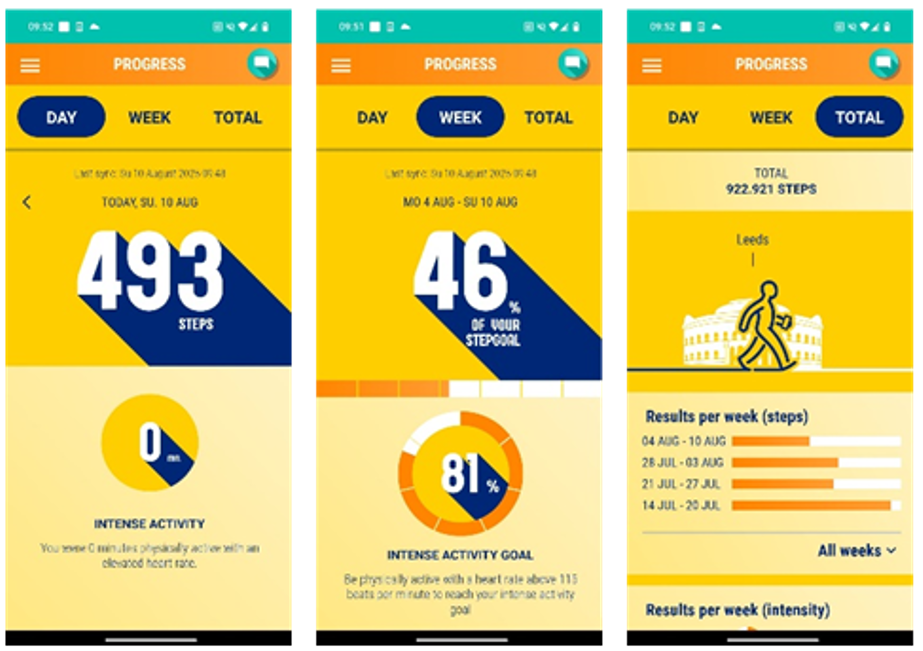
The study starts with a four-week period in which you wear the Fitbit during your normal daily routine. This helps the researchers understand your usual activity levels and confirm whether you are eligible to continue into the main study. The Fitbit is posted to you, and the team will help you set it up.
If you continue into the study, to help make exercise as easy as possible, we are offering two optional extras to everyone taking part: free PureGym membership and free Ordnance Survey Maps Premium membership. Both last for 18 months, which is the full length of the study. These are completely free and entirely optional. Once you have completed the initial baseline period and are confirmed as eligible for the main study, the Fitbit is yours to keep.
What to expect during the sudy
The programme is designed to fit around everyday life and most of it can be completed from home. You will be asked to:
- gradually increase your daily walking, with personalised support through the app and Fitbit
- attend two study visits at Queen Mary University of London – one near the beginning and one at the end of the study. Each visit takes up to about three hours, with breaks whenever you need them
- wear a small movement sensor for a week at a time, at three points during the study, and post it back in a pre-paid envelope
- complete short movement tasks on your smartphone at home, about every six weeks
- take part in assessments including smell, memory and movement tests
- complete questionnaires about areas such as health, sleep, mood and daily activities.
The research team will provide support throughout the study. If you are not used to smartphones or apps, the team will give you extra help, by phone or in person. Reasonable travel costs for the face-to-face study visits will be reimbursed.
The team plans to recruit around 110 people across the UK..
Please note: participation in the Slow-SPEED UK Study is only open to people who currently live in the UK.
Interested, or simply want to know more?
Read the full Slow-SPEED UK Participant Information Sheet.
Please contact the research team by midnight on Sunday 29 November 2026.
Email: v.azoidou@qmul.ac.uk or slowspeed@qmul.ac.uk
There is no commitment in simply asking for more information. Taking part is entirely your choice, and you can change your mind at any time without giving a reason.
More about the Slow-SPEED UK study
Why are researchers studying physical activity and smell loss?
Smell loss is common and can have many different causes such as ageing, colds and other viral infections, allergies, sinus problems and conditions like Parkinson’s. Most people with a reduced sense of smell do not have a serious underlying illness. Research suggests that people with a reduced sense of smell may, as a group, have lower levels of physical activity, physical fitness and mobility than people with a normal sense of smell.
What will the researchers learn?
Slow-SPEED UK is the first study of its kind to investigate whether a long-term, remotely supported physical activity programme can be successfully used by adults with a reduced sense of smell. It is a feasibility study. This means its main purpose is not to find out whether exercise treats smell loss or prevents a particular medical condition. Instead, researchers want to understand whether this type of programme can offer practical support to people with a reduced sense of smell, and whether a larger study could be carried out successfully in the future
The researchers hope to learn what works well, where people encounter difficulties and how the programme and research methods could be improved. They will also collect information about physical activity and general wellbeing, including movement, sleep, mood and quality of life.
Slow-SPEED UK is also part of a wider international research collaboration, with related studies taking place in other countries, including the Netherlands, the USA, Germany and Austria. Although each study is run independently, together they will help researchers understand how physical activity programmes can be designed and delivered for different groups of people to promote healthy brain and body ageing.
The findings from Slow-SPEED UK will help researchers decide how future, larger studies should be designed – ensuring that they are practical, acceptable and shaped around the experiences of the people taking part.
Who is running the study?
Slow-SPEED UK is sponsored by Queen Mary University of London and run by its Centre for Preventive Neurology. It is led by Professor Alastair Noyce (Chief Investigator) and Dr Viktoria Azoidou (Principal Investigator). The study is funded by Queen Mary University of London, with support from Parkinson’s UK, SmellTaste and international partners in the Slow-SPEED research collaboration. It has been reviewed by an independent Research Ethics Committee.
Important:
Slow-SPEED UK is a walking and physical activity research study. It is not a medical treatment study, does not diagnose any condition and is not designed to determine an individual’s risk of developing a future medical condition.